
Vertigo Exercises: Why the Right One Depends on What's Causing Your Dizziness
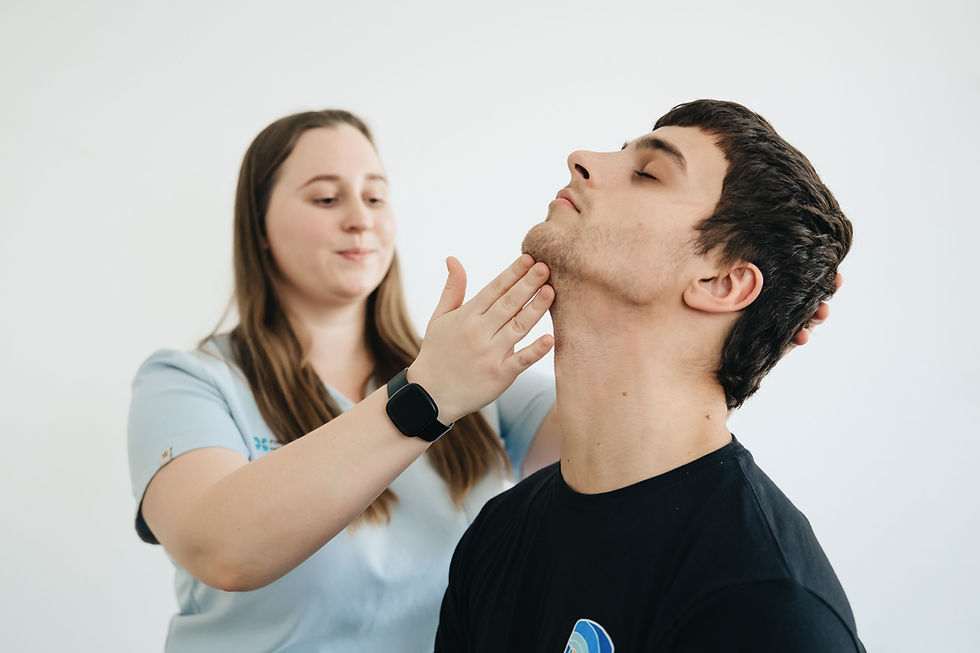
You've found a video of the Epley manoeuvre. Before you try it, there is one question it doesn't answer: which ear is the problem?
Vertigo exercises can work well, but only when they match the cause. The Epley manoeuvre, Brandt-Daroff exercises and gaze stabilisation each treat a different problem, and the most common of those problems affects one side only. Do the right exercise on the wrong side and you'll make yourself dizzy without fixing anything.
This guide explains which vertigo exercise fits which cause, why the affected side matters and when to have a physio check it properly.
Before You Try Vertigo Exercises: Rule Out an Emergency
Most vertigo comes from the inner ear. Occasionally it's a sign of a stroke, and no exercise will help with that.
Call 000 straight away if your dizziness comes with any of these:
slurred speech or trouble finding words
drooping on one side of the face
weakness or numbness in an arm or leg, especially on one side
double vision or sudden loss of vision
a sudden, severe headache unlike any you've had before
being unable to stand or walk, even with support
Don't wait to see if it settles, and don't drive yourself. Our guide to Bell's palsy vs stroke explains why sudden facial weakness is always treated as an emergency.
If your vertigo comes with new hearing loss or ringing in one ear, or simply won't stop, see your GP or go to an emergency department the same day.
Which Kind of Vertigo Is It? BPPV vs Vestibular Migraine vs Vestibular Neuritis
Vertigo is a symptom, not a diagnosis. The three causes below are among the most common, and each needs a different vertigo treatment. For the full list, learn about what causes vertigo and when you should see a physio.
BPPV: Brief Spins When You Move Your Head
Benign paroxysmal positional vertigo (BPPV) is the most common cause of vertigo. Tiny calcium crystals in your inner ear drift out of place and into one of the fluid-filled canals that sense head movement. When you tip your head a certain way, the crystals move and your brain gets a false spinning signal.
BPPV typically feels like:
intense spinning that lasts less than a minute
spinning triggered by rolling over in bed, lying down, looking up or bending forward
feeling fine between episodes, though you may feel off for a while afterwards
BPPV is the condition repositioning manoeuvres like the Epley are designed for.
Vestibular Neuritis: Constant Vertigo After a Virus
Vestibular neuritis is inflammation of the balance nerve on one side, often after a cold or flu. It usually starts suddenly with severe, constant vertigo, nausea and unsteadiness that can last for days. When hearing is affected too, it's called labyrinthitis.
There are no loose crystals to move, so the Epley won't help. Recovery depends on your brain learning to compensate, and that's where gaze stabilisation and balance exercises come in.
Vestibular Migraine: Dizziness With or Without a Headache
Vestibular migraine causes episodes of vertigo lasting minutes to days, sometimes with light or sound sensitivity and sometimes with no headache at all.
Repositioning won't help here either. Managing migraine triggers comes first, with vestibular exercises to rebuild your tolerance to movement.
BPPV | Vestibular neuritis | Vestibular migraine | |
How long it lasts | Under a minute per episode | Constant for days, then easing over weeks | Minutes to days |
What sets it off | Specific head positions | Usually starts on its own | Migraine triggers such as poor sleep, stress or bright light |
Exercises that fit | Repositioning manoeuvre on the affected side | Gaze stabilisation and balance exercises | Gradual vestibular and balance exercises alongside migraine management |
Does the Epley help? | Yes, if it's the right canal and side | No | No |
If you only get dizzy when you stand up quickly, that's usually a blood pressure response rather than vertigo.

The Epley Manoeuvre: What It Does and Who It's For
The Epley manoeuvre is a repositioning technique for BPPV in the posterior canal, the most common type. In American videos you'll often see it spelt Epley maneuver, but it's the same technique. It moves your head and body through a set sequence so gravity guides the crystals out of the canal and back to where they can't cause symptoms.
In outline, it looks like this:
You sit on a bed with your head turned 45 degrees towards the affected side.
You lie back with your head slightly lower than your shoulders. Expect the spinning to start.
Your head is turned to the other side, then your body rolls onto that side.
You sit up slowly.
Each position is held until the spinning settles, usually 30 seconds or more. Step 1 is where the side matters. Turn towards the wrong ear and the manoeuvre targets a canal that isn't the problem.
The evidence is strong. A Cochrane review of 11 trials and 745 participants found the Epley was far more likely to resolve vertigo than a sham manoeuvre. In the trials that measured it, around 56% of people treated with the Epley reported their vertigo had resolved, compared with about 21% after a sham. Nausea during the manoeuvre was common, but no serious side effects were reported.
The Epley is for you if:
BPPV has been confirmed
the affected canal is the posterior canal
the affected side is known
It isn't the right choice if:
your vertigo is from vestibular neuritis or vestibular migraine
the horizontal canal is involved, which needs a different manoeuvre
you have neck, back, heart or circulation problems, unless a clinician has checked whether the technique needs modifying
Brandt-Daroff Exercises: The Home Option for BPPV
Brandt-Daroff exercises use repeated side-lying to help disperse the crystals and help your brain get used to the spinning. Unlike the Epley, you do them on both sides, so you don't need to know which ear is affected. That's why they're often given as a home option.
They're commonly done like this:
Sit on the edge of your bed.
Turn your head 45 degrees to the left, then lie down on your right side. Stay there until any spinning stops, plus about 30 seconds.
Sit back up and wait about 30 seconds.
Repeat on the other side, with your head turned to the right as you lie on your left side.
A set is commonly five repetitions on each side, done a few times a day. Your physio will set the right amount for you.
The trade-off is speed. In one randomised trial of 81 people with posterior canal BPPV, 80.5% of those treated with a repositioning manoeuvre had a negative test after one week, compared with 25% of those doing Brandt-Daroff exercises. At one month the figures were 92.7% and 42.5%. Brandt-Daroff can still be useful when a manoeuvre isn't practical or for leftover symptoms, but it's usually not the quickest route.
A few safety points:
Do them on a bed, never standing.
Have someone nearby the first few times.
Don't do them until you know it's BPPV.
Gaze Stabilisation and Balance Exercises for Dizziness That Lingers
Some dizziness has nothing to do with crystals. After vestibular neuritis, concussion or vestibular migraine, you may still feel unsteady in busy places or when you turn your head quickly. The same can happen after BPPV has cleared.
This is where vestibular rehabilitation helps. These exercises retrain your brain to make better use of the balance signals it has.
Gaze Stabilisation Exercises
Gaze stabilisation trains your eyes to stay fixed on a target while your head moves.
A common starting exercise works like this:
Hold a card with a letter on it at arm's length.
Keep the letter in focus while you turn your head from side to side.
Start slowly and in short bursts, building speed as it gets easier.
Mild dizziness during these exercises is normal and part of how they work. Your physio will tell you how much is enough and when to progress.
Balance Exercises
Standing with your feet together, then with your eyes closed
Standing heel to toe
Walking while turning your head
Do them next to a kitchen bench or in a corner so you can steady yourself.
Progressing too fast can flare symptoms, so these programs are tailored to you.
Our vestibular physiotherapy starts with an assessment, then builds exercises around what you find hardest day to day.
Why the Side Matters and How a Physio Tests for It (Dix-Hallpike)
BPPV almost always affects one ear, and the Epley only clears the canal it's aimed at. Do it towards the wrong side and the crystals stay where they are. You'll feel dizzy from the manoeuvre without fixing the problem.
Guessing from your symptoms isn't reliable either. Many people can't tell which side brings it on, or feel it either way.
What the Dix-Hallpike Test Involves
Your physio moves you quickly from sitting to lying, with your head turned and tilted slightly back. They check one side, then the other, watching your eyes closely each time.
If BPPV is present, your eyes make a characteristic flicking movement called nystagmus. Its direction tells your physio which ear and which canal is involved.
The test can bring on a short burst of vertigo. That's expected and it's part of how the diagnosis is made.
If the Dix-Hallpike is negative, your physio may use a roll test to check the horizontal canal, which needs a different manoeuvre. They may also look for another cause.
What Else a Physio Checks
your neck and back, to make sure the positions are safe for you
your eye movements and coordination, to screen for signs that need a doctor
your balance and walking, to see whether you need rehab beyond repositioning
When Dizziness Makes Getting to a Clinic Hard: Vertigo Treatment at Home
When the room spins every time you move, getting in a car is the last thing you want. You also shouldn't be driving yourself.
Our physios can come to you across the Gold Coast, Logan and Brisbane. A home visit can include:
a vestibular assessment, including the Dix-Hallpike test
repositioning on your own bed if BPPV is confirmed
a home exercise program set up in the space where you'll do it
a falls-risk check of your home while you're unsteady
Find out more about in-home physiotherapy. If your dizziness is linked to a neurological condition or a head injury, neurological physiotherapy may be the better fit.
You don't need a referral to see a physio. GPs and other health professionals can refer through our referral page.
Request a Home Visit for Dizziness
Tell us what's happening and we'll arrange an assessment at home or at our Pimpama clinic, whichever is easier for you right now.
Frequently Asked Questions
How often should I do vertigo exercises?
It depends on the exercise and the cause. The Epley is repeated until the Dix-Hallpike test is negative. Brandt-Daroff exercises are commonly done a few times a day, and gaze stabilisation and balance exercises are usually short sessions spread through the day. Your physio will set the right amount for you.
How quickly do vertigo exercises work?
For BPPV, the right repositioning manoeuvre can bring relief quickly. Research shows higher resolution rates in the first week with the Epley than with Brandt-Daroff exercises. Gaze stabilisation and balance exercises build up more gradually over weeks, and everyone responds differently.
Can I do the Epley manoeuvre on myself?
Self-Epley techniques exist and are sometimes taught once a physio has confirmed the affected side and canal. Without that, you risk treating the wrong ear. If you have neck, back or heart problems, have it done by a clinician.
Can I drive with vertigo?
Not while you're dizzy, and not straight after a repositioning manoeuvre. If your vertigo keeps coming back, ask your GP whether it affects your fitness to drive. In Queensland, you must tell the Department of Transport and Main Roads about long-term medical conditions that are likely to affect your driving.
What is the most effective exercise for vertigo?
There isn't one best exercise for everyone. For posterior canal BPPV, a repositioning manoeuvre like the Epley has the strongest evidence. For vestibular neuritis and lingering dizziness, gaze stabilisation and balance exercises are the usual approach.
What's the quickest way to get rid of vertigo?
It depends on the cause. If it's BPPV, the correct manoeuvre on the correct side is usually the quickest route. For other causes there's no quick fix, and an assessment by a physio or GP is the fastest way to the right treatment.
What exercises should you avoid with vertigo?
Avoid repositioning manoeuvres until BPPV and the affected side are confirmed. During an acute episode, skip fast head movements, lying down quickly and balance work without support.
This information is general and is not a substitute for an individual assessment. Please book an appointment for advice tailored to you. If you or someone near you has sudden dizziness with slurred speech, facial droop or weakness, call 000.


Comments